


How Stolen Crypto Is Recovered When Blockchain Tracing Is No Longer Enough
When people think about cryptocurrency theft investigations, they tend to picture the same sequence: an analyst traces transactions, identifies an exchange, submits a freeze request. In straightforward cases, this works. But a significant share of real cases does not end at an exchange — it ends where standard tools stop producing results.
Where Stolen Assets Go
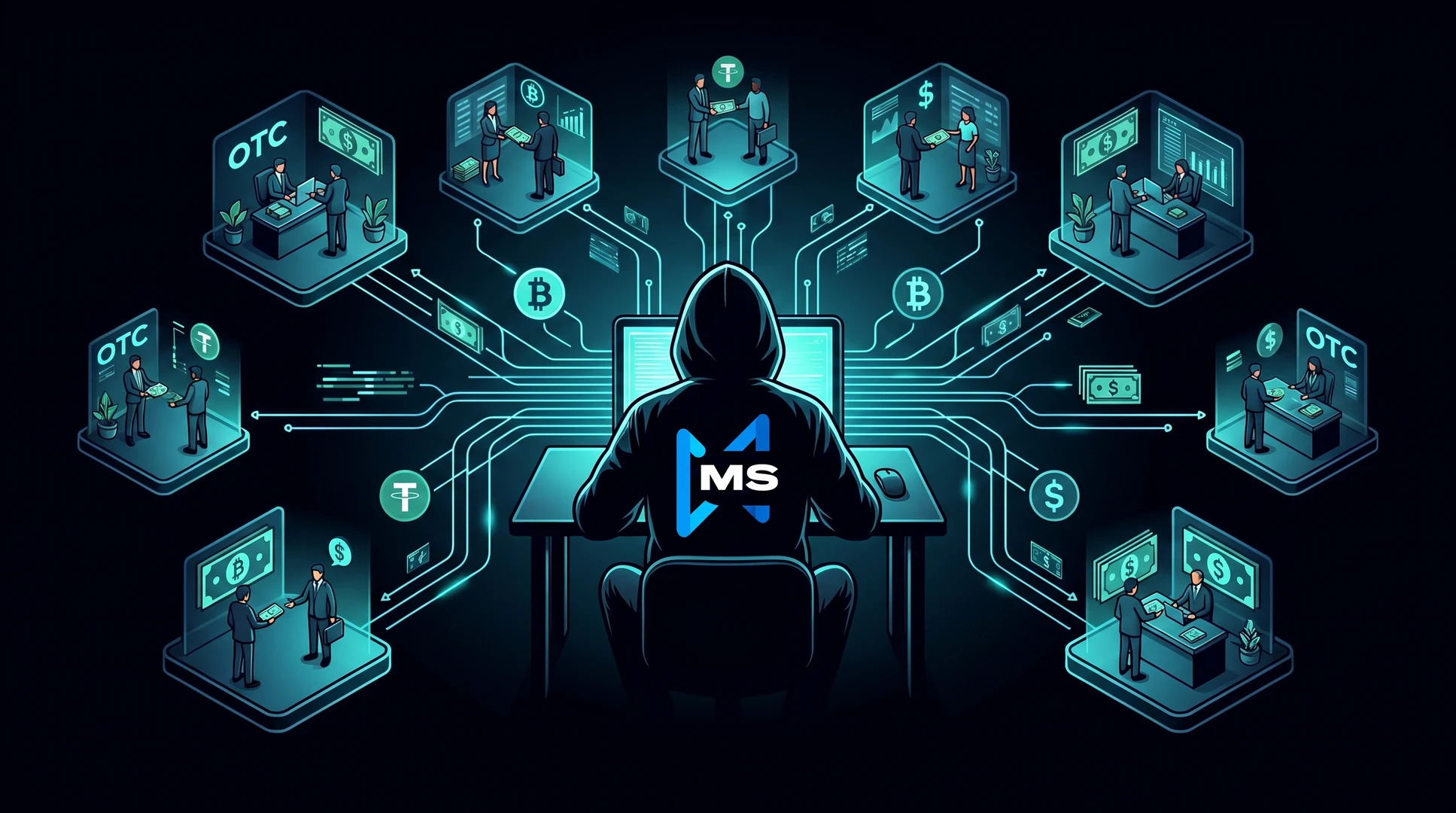
Professional crypto laundering schemes have long adapted to the capabilities of blockchain analytics. Funds rarely go directly to a major exchange with strict KYC requirements — they are routed through chains of transit addresses, split, mixed, and ultimately withdrawn through OTC crypto exchange services. This is precisely where the trail goes cold for most market participants.
The OTC segment is not a unified system with unified compliance. It is thousands of operators around the world: from structured platforms in financial hubs to informal exchange points operating through messaging apps. Southeast Asia, the Gulf states, Eastern Europe — each region has its own infrastructure, its own players, its own degree of transparency.
An analytics system can identify a cluster of addresses with characteristics of an exchange service. But who stands behind it, how to make contact, and how to get a response — that is no longer a question of analytics. It is a question of relationships.
What a Partner Network Actually Provides
Match Systems has spent years building direct relationships with OTC operators around the world. A significant number of them use our tools and services themselves — this is not an abstract partnership, but a working relationship built on mutual trust and a shared understanding of how compliance works on both sides.
This translates into a concrete practical advantage: when tracing leads to an OTC cluster in Dubai or Bangkok, we have a direct line to the operator — not just an address on the blockchain. The difference between ‘submitted a request’ and ‘spoke with the person who makes the decision’ can be measured in hours when it comes to asset recovery — and hours are precisely what determines whether funds move on or not.
The Address-Rotation Problem — and How We Solve It
One of the standard methods for evading tracking is rotating working addresses. An OTC operator or mixer periodically changes wallets, severing the direct link to previously identified infrastructure. Until recently, this was a serious barrier to investigations — establishing that a new address belonged to an already-identified subject required time that active cases typically do not have.
We approach this differently today. A proprietary machine learning tool allows us to establish connections between new addresses and already-identified subjects within hours of a rotation. This is not a guarantee in every case — but it represents a fundamentally different level of operational speed compared to manual analysis.
Case Study: Dubai, OTC, and Asset Recovery
A client came to us after falling victim to cryptocurrency fraud. Blockchain analysis showed that the stolen funds had passed through a chain of transit addresses and ended up at an OTC platform — apparently for the final stage of laundering.
In parallel with tracing, we immediately labeled all addresses associated with the attacker. This allowed us to monitor the movement of funds in real time and maintain visibility at the moment the assets reached the exchange. It bought critical time: by the time our team reached the platform’s compliance team directly through our partner network, the transaction had already been suspended.
We then accompanied the process of returning the funds to the legitimate owner — in full compliance with all required procedures and platform requirements.
This is a case that cannot be resolved by tracing alone. It is resolved by a combination: analytics, speed of response, real-time address labeling, and direct contact with the right people.
The Difference Between a Result and a Report
The crypto investigation market has no shortage of competent analysts who can build a quality transaction graph and establish where funds went. That is necessary — but it is not sufficient.
Asset recovery is the final stage, and it requires not only an understanding of the blockchain but the ability to act beyond it: to negotiate, to influence decisions, to work with people in jurisdictions where there is no regulatory pressure and no mandatory compliance framework. This is where a partner network built over years stops being an advantage and becomes the deciding factor.

Hot Stories
- Articles A legitimate user can get their USDT frozen over funds with a tainted history.
- Articles Can stolen crypto be recovered?
- News Fake Meeting Link Scam: How Crypto Gets Stolen
- News HTX Sanctions: Risks for Crypto Assets
- Articles How hackers steal cryptocurrency
- News Tether Unfroze $79M - And We Know Why
- Articles Crypto stolen? The first 60 minutes decide what's recoverable.
- Articles Tether Froze Your USDT: What’s Happening and What to Do
- Articles Crypto wallets get hacked through devices, apps, and human error, not the blockchain.
- Articles Can You Identify Who Owns a Crypto Wallet?